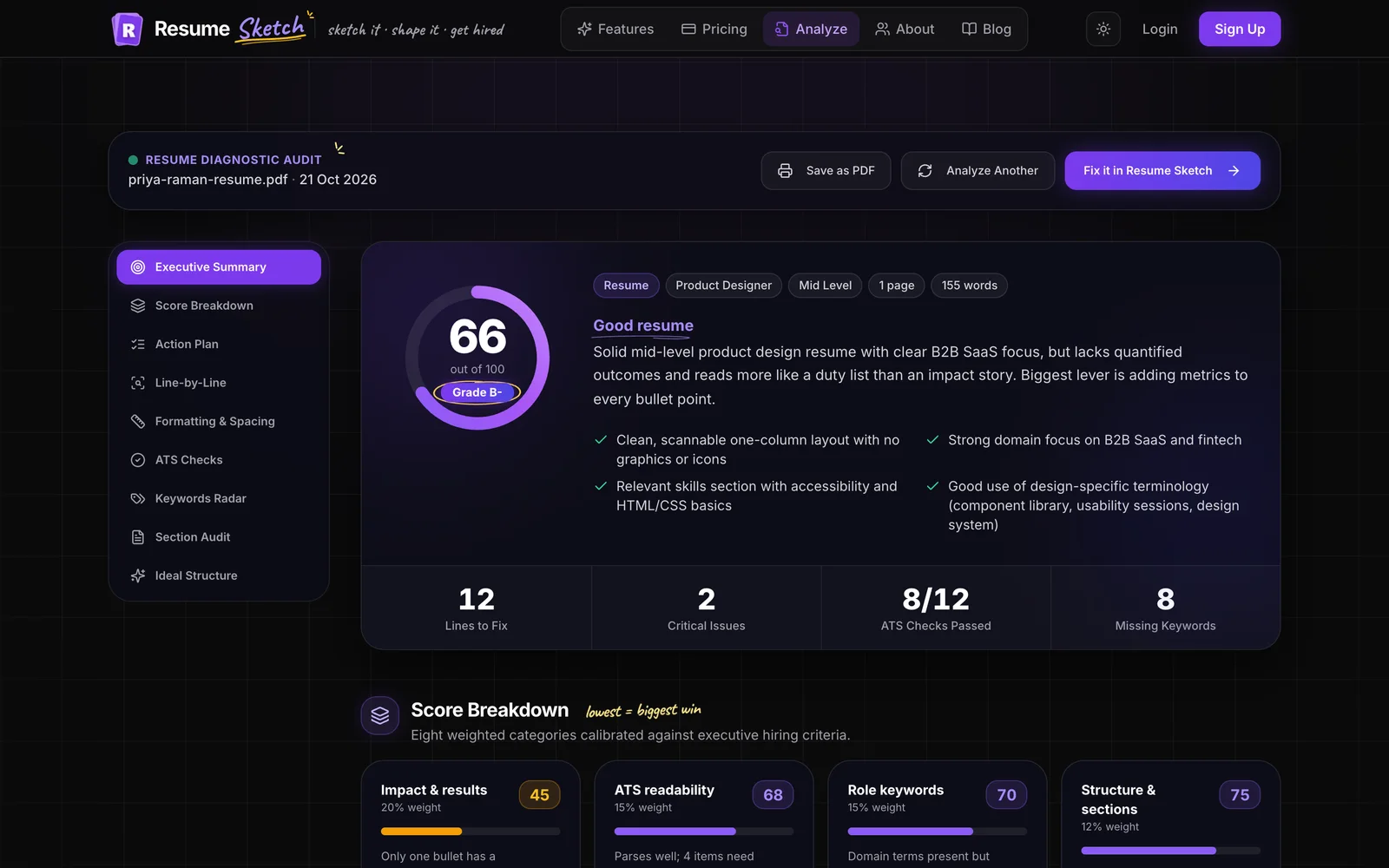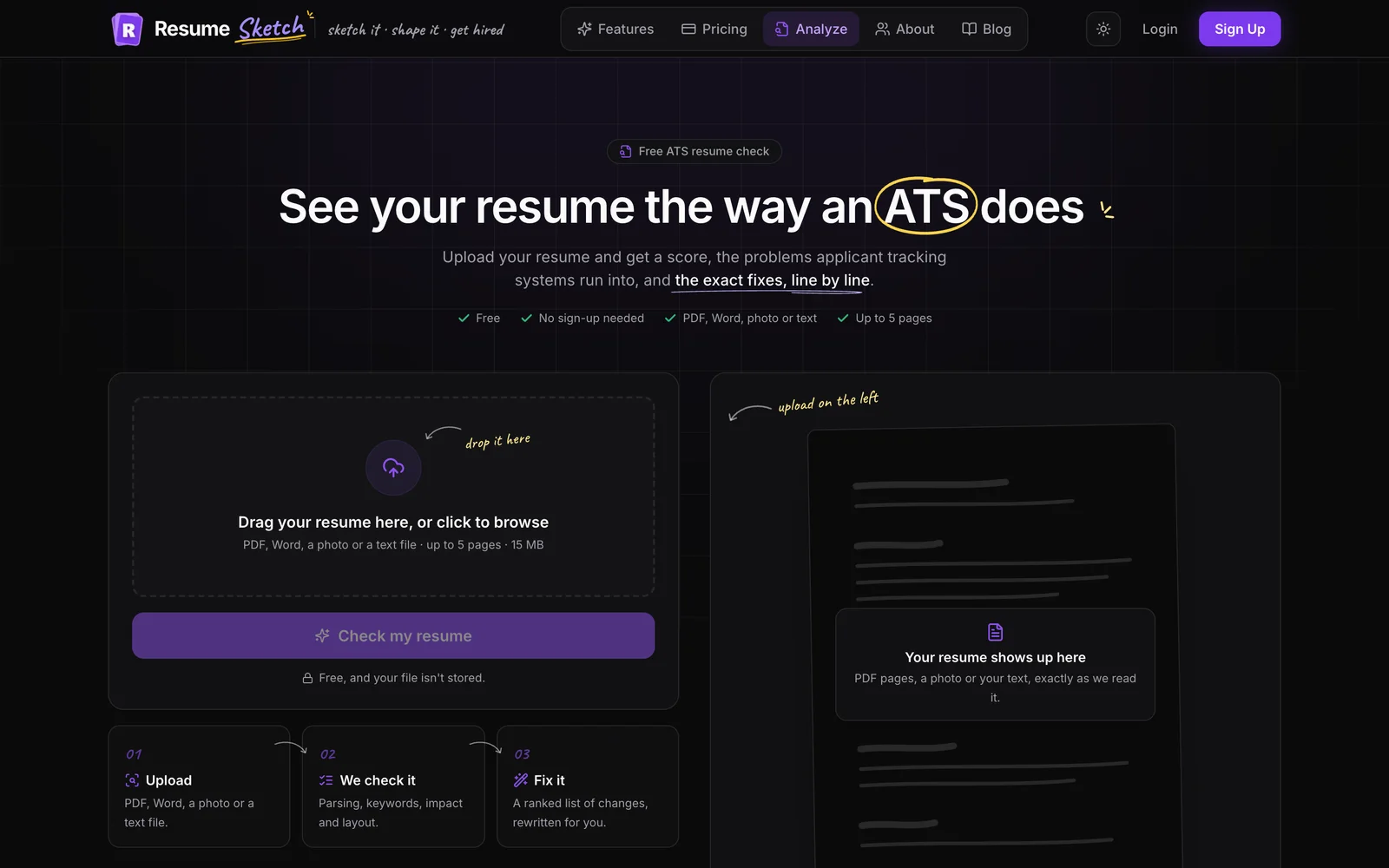
The short answer
Resume keywords are the specific skills, tools, job titles, certifications and domain terms a recruiter is likely to search for. Find them by reading the job description for repeated and required terms, then use the ones that truly describe you in your title line, summary, skills section and experience bullets. Show them in context with results, and never add skills you don't have.
On this page
01What resume keywords are, and why they matter
When a recruiter opens an applicant tracking system with a few hundred applicants, they rarely read every resume top to bottom. They search and filter: "financial analyst" AND (Excel OR "Power BI") AND forecasting. Some newer systems also suggest matches based on the skills in a posting. Either way, your resume has to contain the words that describe the job, or it won't come up.
Keywords fall into a few groups:
- Job titles: Data Analyst, Registered Nurse, Account Executive, Site Reliability Engineer.
- Hard skills and tools: SQL, Tableau, Salesforce, AutoCAD, Python, IFRS, Figma.
- Certifications and licenses: PMP, CPA, CA, AWS Certified Solutions Architect, RN license.
- Domain terms: B2B SaaS, revenue recognition, clinical trials, supply chain, payments.
- Methods and responsibilities: A/B testing, stakeholder management, agile, root cause analysis.
Keywords are not a trick for beating software. They are the vocabulary of the job. Using it clearly helps both the search and the human who reads your resume next.
02How to find keywords in a job description
- 1
Copy the full posting
Include the responsibilities, the requirements and the "nice to have" list. The title and the requirements carry the most weight.
- 2
Highlight required qualifications first
Look for phrases like required, must have, minimum and the first few bullets under Requirements. These are the terms most likely to be searched and filtered on.
- 3
Mark what repeats
If stakeholder management appears three times, or the posting mentions Snowflake in both the summary and the requirements, it matters to this team.
- 4
Note the exact wording
If the posting says customer success, use that rather than client happiness. If it says JavaScript, don't only write JS. Include both the acronym and full form for key terms:
Search Engine Optimization (SEO). - 5
Compare with two or three similar postings
Terms that appear across several postings for the same role are the core keywords for that job. Use them on your base resume, then tailor for each application.
- 6
Check what's true for you
Sort the list into three groups: I have it and show it, I have it but don't mention it, and I don't have it. The middle group is where tailoring pays off. The last group stays off your resume.
03Hard skills vs soft skills
Hard skills are specific and checkable: languages, tools, methods, certifications. They are the terms recruiters search for most, so list them plainly in your Skills section and use them in your bullets.
Soft skills such as leadership, communication and problem-solving matter just as much to hiring managers, but listing them as single words proves nothing. Show them through what you did.
Claims
- Excellent communication skills
- Strong leadership
- Detail-oriented problem solver
- Team player
Evidence
- Presented quarterly pricing analysis to the leadership team, leading to a revised discount policy
- Led a team of 6 engineers through a database migration with no customer-facing downtime
- Found and fixed a billing error that had been overcharging 40 accounts, and added a check to prevent it
- Partnered with sales and support to rebuild the onboarding flow, cutting first-week tickets noticeably
04Where to place keywords on your resume
Keywords count most when they appear in the right places and in context. Spread them naturally across these sections:
| Section | What to include | Example |
|---|---|---|
| Title line under your name | The target job title, if it honestly fits | Senior Data Analyst | SQL, Python, Tableau |
| Summary | Title, years of experience, two or three core skills and your domain | Data analyst with 6 years in e-commerce, specializing in SQL, experimentation and forecasting. |
| Skills | Hard skills and tools, grouped by type, using the posting's wording | Analytics: SQL, Python (pandas), A/B testing · BI: Tableau, Looker |
| Experience bullets | The most important keywords, shown with a result | Built a churn forecasting model in Python that helped the retention team prioritize at-risk accounts |
| Job titles | Your real title, with a clarifier if the posting uses a different name for the same job | Client Partner (Customer Success) |
| Certifications | Full name and acronym | Project Management Professional (PMP) |
A good rule: every major keyword from the posting that applies to you should appear in your Skills section and at least once in your experience, where a reader can see how you used it.
05How to avoid keyword stuffing
Stuffing means forcing keywords in where they don't belong: endless skills lists, the same term in every bullet, or hidden text. Even when it gets you found, it hurts you the moment a person reads the page.
Stuffed
- Results-driven project manager with project management experience managing projects using project management tools.
- Skills: a list of 45 tools, including several you used once in a tutorial.
- The job description pasted in white text at the bottom of the page.
Natural
- Project manager (PMP) who has delivered 12 software launches on schedule using Jira and Agile ceremonies.
- Skills: the 10 to 20 tools and methods you'd be comfortable being interviewed on.
- Keywords used in real sentences that describe what you did and what changed.
06Keyword examples by role
These are typical keywords, not a list to copy. Always take your final list from the specific posting you're applying to.
| Role | Hard skills and tools | Domain and method terms |
|---|---|---|
| Software engineer | Python, Java, TypeScript, React, Node.js, AWS, Docker, Kubernetes, PostgreSQL | System design, microservices, CI/CD, code review, testing, observability |
| Data analyst | SQL, Python, Excel, Tableau, Power BI, Looker, dbt | A/B testing, forecasting, dashboards, data modeling, stakeholder reporting |
| Product manager | Jira, Amplitude, Mixpanel, Figma, SQL | Roadmap, discovery, user research, prioritization, go-to-market, OKRs |
| Digital marketer | Google Ads, Meta Ads, GA4, HubSpot, SEMrush | SEO, paid acquisition, conversion rate optimization, lifecycle email, attribution |
| Accountant / CA | SAP, Oracle, Tally, Excel, QuickBooks | IFRS, GAAP, Ind AS, audit, reconciliation, tax compliance, month-end close |
| Registered nurse | Epic, Cerner, IV therapy, BLS, ACLS | Patient assessment, care planning, medication administration, triage, patient education |
| Sales / account executive | Salesforce, HubSpot, Outreach, LinkedIn Sales Navigator | Pipeline management, quota attainment, discovery calls, negotiation, B2B SaaS |
| Customer success manager | Gainsight, Zendesk, Salesforce | Onboarding, renewals, churn reduction, QBRs, account health, upsell |
For a deeper example in one field, see the software engineer resume guide.
07Tailoring keywords with the Resume Sketch target job
Doing this by hand for every application is slow. In Resume Sketch, you can attach the job you're applying for to a resume, and the AI features use it to tailor their suggestions.
- 1
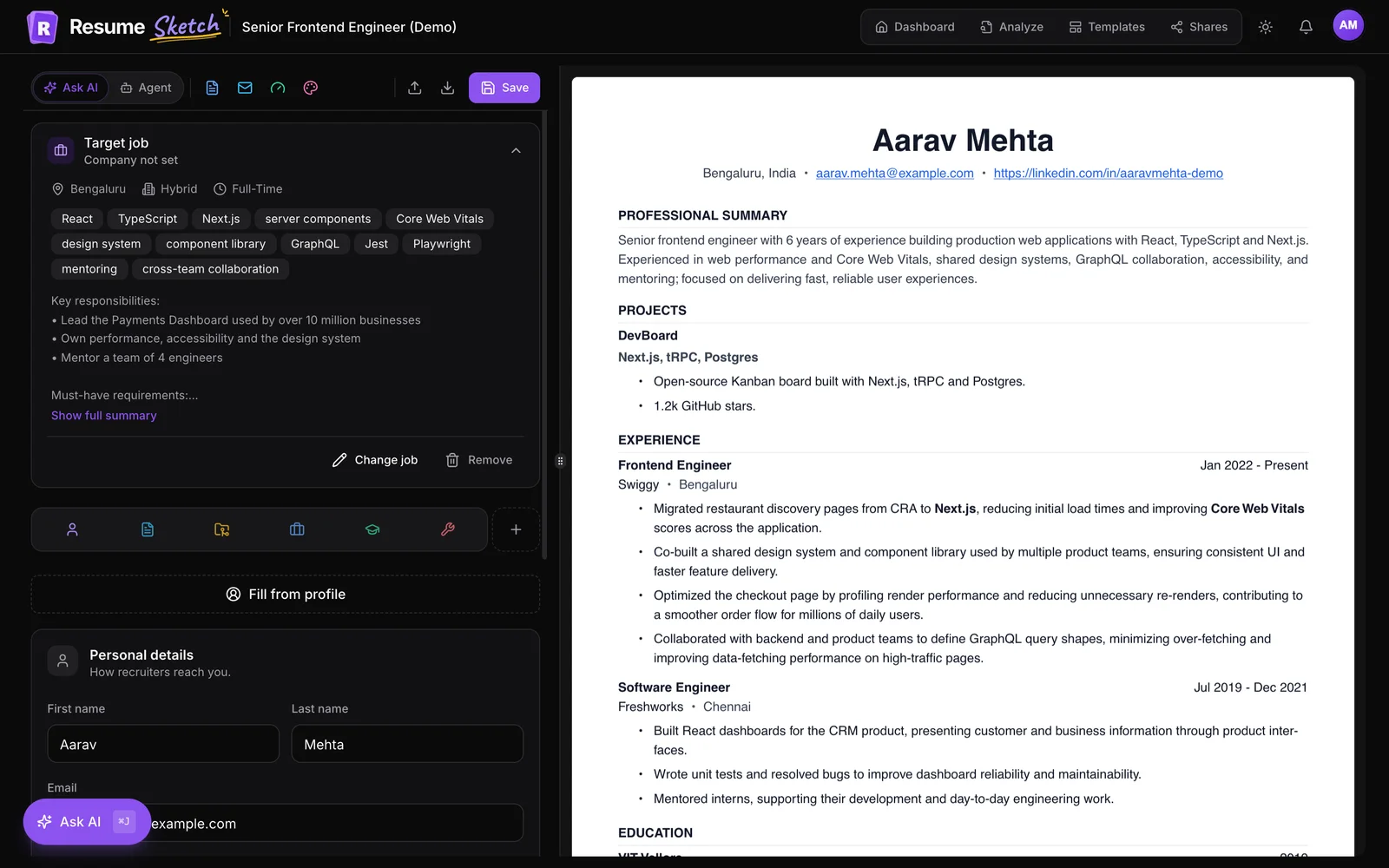
Add a target job
In the editor, open the Target job card at the top (it reads "Add one to tailor AI suggestions" when empty) and paste the full job posting. The AI picks out the title, company and key requirements. Check them, fix anything it got wrong, and save.
- 2
See which keywords you already cover
Open the Score tab and run a review. With a target job set, it checks your resume against that role and lists the keywords you already cover, and those that are missing. Add the missing ones only if you genuinely have them.
- 3
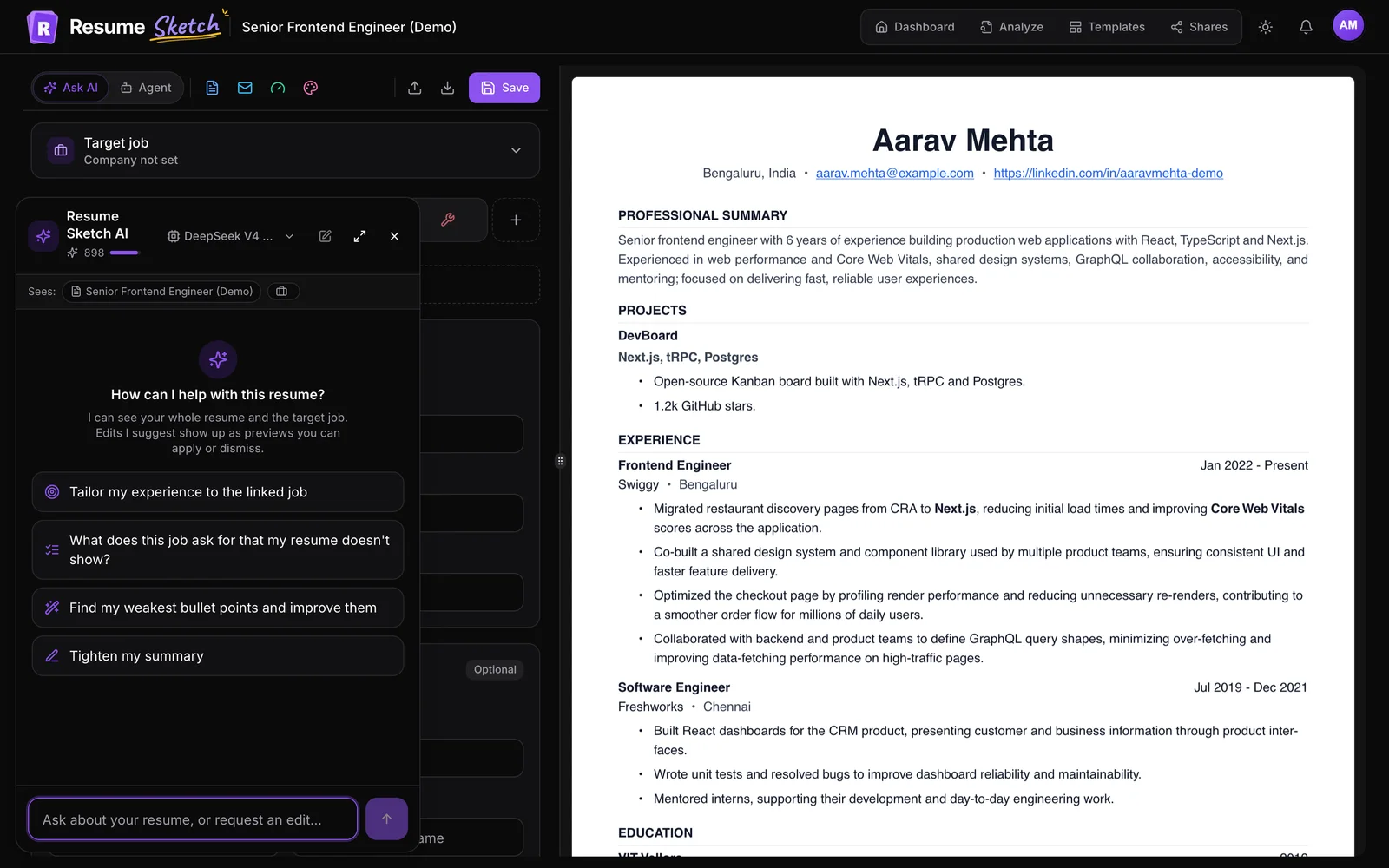
Rewrite with Ask AI
Open Ask AI (⌘J or Ctrl+J) and ask it to work a missing skill into a relevant bullet, or to rewrite your summary for this role. Its edits appear as previews that you accept or reject.
- 4
Check the finished file
Download the PDF and run it through the ATS analyzer. Its keywords radar shows the terms found in your document and the ones worth adding.
The full walkthrough is in how to tailor your resume to a job description. If you apply to several kinds of roles, keep one resume per role type and tailor a copy for each important application.
Frequently asked questions
How many keywords should a resume have?
There's no fixed number. Cover the core requirements of the posting that genuinely apply to you, list your relevant hard skills (often 10 to 20), and show the most important ones in your experience bullets. Readability matters more than count.
Should I copy the exact wording from the job description?
Yes, for skills, tools, certifications and the job title, as long as it's accurate. Don't copy whole sentences or responsibilities. Describe your own work in your own words, using the posting's terms where they fit.
Do soft skills count as keywords?
Some do, especially when a posting names them as requirements, like stakeholder management or client communication. Use the phrase once in a bullet that proves it rather than listing soft skills on their own.
Should I include acronyms or full terms?
Both for important terms. Write the full term followed by the acronym the first time, such as Customer Relationship Management (CRM), so either version matches a search.
Is it OK to add a skill I'm still learning?
Only if you can talk about it honestly. You can list it with context, such as a course or a project where you used it. Don't present it as professional experience you don't have.